

In a special interview, the departing commander of the IDF Nahal Brigade, Col. Dan Goldfus, talks about the challenges of his position, the threats facing the various theaters, and dealing with the young generation joining the military. "The troopers come from a technological world where everything is instant. Our job is to challenge them"
Wednesday, July 19, 2023
Comparing Two Goldfoot Lines: Ian Goldfoot of South Africa and David and Nadene Goldfoot-American Siblings
Nadene Goldfoot

David is 8 years younger than Nadene
Update on DNA by David whose Y haplogroup is QBZ67 from Rebekah Adele Canada, researcher: The Y-chromosome haplogroup Q has three major branches: Q1, Q2, and Q3. Q1 is found in both Asia and the Americas where it accounts for about 90% of indigenous Native American Y-chromosomes; Q2 is found in North and Central Asia; but little is known about the third branch, Q3, also named Q1b-L275. Here, we combined the efforts of population geneticists and genetic genealogists to use the potential of full Y-chromosome sequencing for reconstructing haplogroup Q3 phylogeography and suggest possible linkages to events in population history. We analyzed 47 fully sequenced Y-chromosomes and reconstructed the haplogroup Q3 phylogenetic tree in detail. Haplogroup Q3-L275, derived from the oldest known split within Eurasian/American haplogroup Q, most likely occurred in West or Central Asia in the Upper Paleolithic period. During the Mesolithic and Neolithic epochs, Q3 remained a minor component of the West Asian Y-chromosome pool and gave rise to five branches (Q3a to Q3e), which spread ac...
.jpg)
Ian's Y haplogroup has been tested at 67 alleles with Q-M378.
David's Y haplogroup has been Big Y tested with QBZ67. Previously it tested as Q-Y2200.
Genealogy shows that Ian, born November 4, 1934 in Kruderdorp, South Africa was the son of Solomon "Shlomo" Goldfoot b: August 1904 in Dublin, Ireland and Mary Alpert b: 1906 in Kilmarnark, Scotland. Solomon was the son of Hyman "Haim" Goldfus/Goldfoot b: 1867 in Telsiai, Lithuania and Bluma Kogan. Ian died 9 Feb 2022. Hyman was the son of Avraham Goldfus b: 1825 and Hinda. Avraham was the son of Yankel Goldfus b: 1768-1774 and Khana Unknown in Telsiai.
At one point, Nathan was also living in Dublin, Ireland and from the looks of the address, was next door or with his Goldfoot South African family recently from Telsiai, Lithuania family. Nathan had gone to England first, then went to Ireland. It was the path of many other Jewish Lithuanians.
David and Nadene are the children of Moses/Morris/Maurice Goldfoot b: 1908 of Portland, Oregon and Mildred Robinson born in 1934 and 1942. Maurice was the son of Nathan Abraham Goldfus/Goldfoot of Telsiai, Lithuania b:1881-1884. Nathan was the son of Movsha Goldfus b:1836 in Telsiai and Beila Unknown of Telsiai. Movsha was the son of Josel Goldfus b: 1798 and Rasha Unknown in Telsiai. Josel was the son of Yankel Goldfus b: 1768-1774 and Khana Unknown in Telsiai.
Josel and Movsha were brothers, sons of Yankel.
David took 5 generations to get to Yankel. (David, Maurice, Nathan, Movsha, Josel, Yankel.
Ian took 4 generations to get to Yankel. (Ian, Solomon, Hyman, Abraham, Yankel. )


My genealogy work was checked by another distant cousin, Gene Lepere, author her autobiography, of NEVER PASS THIS WAY AGAIN. Gene was the daughter of art collector, Joseph Hirshhorn, and worked as a marketing consultant. She lived in Los Angeles. So we're connected to her family. My brother and cousin Sandra match Donald, one of the male Hirshhorns. Gene led an amazing life. I used Jewishgen for much of my work.
.JPG)
.JPG)
The amazing thing is that Ian moved to Texas and was living in Houston. David left the Northwest and also is living in Texas. Nadene finally took a trip and visited David and his wife, Lorraine and the three Goldfoots met at David's home for a Shabbat dinner. The time went by too fast for me. By the way, Ian had that very British/South African accent. I have spent many years teaching English to foreigners, but I had a hard time at times catching what Ian said. Lucky for me it was still English and not Lithuanian or Russian. Oh yes, on the other Goldfus/Goldfoot side, there is a Nadine Goldfoot in England who is a lawyer, helping foreigners with their problems. She's much younger than myself, and is my 3rd cousin once removed. My 1st cousin, daughter of my father's sister, is a PhD of technical English, headed the ESL dept. at our university in teaching English to foreigners. It must run in the family.  Back home in Gresham, Oregon
Labels: Austin, David Goldfoot, Dublin, genealogy, Houson, ian Goldfoot, Ireland, South Africa, Texas
Monday, August 29, 2022
Looking for Goldfus, Goldfuss, Goldfoot and Finding Them
Nadene Goldfoot

Our name in Lithuania was Goldfus, and I found our relatives in Telsiai, Lithuania.
Usually, Goldfus is the Yiddish spelling, and Goldfuss in the German spelling.
I found the following in Rehovot רחובות, Israel. Rehovot is a city in the Central District of Israel, about 20 kilometers south of Tel Aviv. In 2019 it had a population of 143,904.
Aryeh Goldfuss b: 1903 d: 28 November 1997. age 90,parents-Chaim, and Elka
Yechiel Goldfuss b: 1915 d: 28 November 1997 age 82, parents-Chaim, Hella (Elka, maybe ?)

By chance, I have in my tree, the family:
Descendants of Chaim Goldfus
1 Chaim Goldfus b: 1885 in Laukuva, Telsiai uesd, Kovno Gubernia, Lithuania-Russian Empire d: 1942 in WWII Holocaust Age at death: 57 est.
. +Elka Sacks b: Abt. 1885 in prob. Laukuva, Telsiai uesd, Kovno, Gubernia, Lithuania-Russia d: Abt. 1942 in WWII Holocaust m: 1903 in Laukuva, Telsiai uesd, Kovno gubernia Age at death: 57 est. m: 1903 in Laukuva, Telsiai uesd, Kovno gubernia
.. 2 Samuel Shmuel Moses Moshe Goldfus b: March 17, 1911 in Laukuva, Telsiai uesd, Kovno Gubenia, Lithuania-Russian Empire d: December 01, 2001 in Cape Town, South Africa Immigration: 1927 Cape Town, South Africa Age at death: 90
...... +Frieda Hotz b: January 28, 1921 in Klerksdorp, Orange Free State, South Africa d: November 05, 1977 in Bloemfontein, Orange Free State, South Africa m: Bet. March 17, 1943 - 1945 in Bothaville, Orange Free State, South Africa Age at death: 56 m: Bet. March 17, 1943 - 1945 in Bothaville, Orange Free State, South Africa
.. 2 Yechiel Goldfus b: Abt. 1912 in Laukuva, Telsiai uesd, Kovno Gubenia, Lithuania-Russian Empire d: in Rehovoth, Israel Immigration: 1934 Palestine
...... +Esther Armband
.. 2 Aryeh Leib Leon Goldfus b: 1913 in Laukuva, Telsiai uesd, Kovno Gubenia, Lithuania-Russian Empire d: in Rehovoth, Israel
...... +Gitta b: in Budapest, Hungary m: 1946 in Italy m: 1946 in Italy
.. 2 Etta Goldfus b: Abt. 1914 in Laukuva, Telsiai uesd, Kovno Gubenia, Lithuania-Russian Empire d: 1942 Age at death: 28 est.
.. 2 Benyamin Goldfus b: Abt. 1915 in Laukuva, Telsiai uesd, Kovno Gubenia, Lithuania-Russian Empire d: Abt. 1942 Age at death: 27 est.
.. 2 David Goldfus b: 1923 in Laukuva, Telsiai uesd, Kovno Gubenia, Lithuania-Russian Empire Immigration: Israel
...... +Esther b: Abt. 1923
Chaim Goldfus b: 1951Rehovot, Israel, married to Rochael Benziman, and children-Yuval b: Jan 10, 1983; Tal Yechiel b: July 1989, and Gili b: abt. 1990. They could be descendants. Chaim is the son of David Goldfus b: 1923 of Laukava,, Lithuania and David is the son of Chaim Goldfus b: 1885 d: 1942 in the Holocaust. Chaim's wife was Elka.
We do name using family names already deceased. This could be a family connection, especially since both sets were from Rehovot, Israel.
My father, Maurice Goldfoot's line has a direct line to Jonah "Iones" Goldfoot b: 1730 in Telsiai, Lithuania. Evidently our surname was anglicized when our grandfather, Nathan Abraham Goldfus b: 1871, immigrated to England for a short spell, then moved onward to the states and our state of Oregon.
The interesting fact to me is that I made aliyah in 1980 but returned to Oregon at the very end of November 1985. I lived in Haifa for a year and then settled down in Safed (Tzfat). I was in Tel Aviv, but didn't get to Rehovot. I did get to meet and know the famous Stanley Goldfoot of South Africa and Jerusalem, though, former chief of intelligence for the Stern Group before Israel's birth in 1948. He was either a 2nd or 3rd cousin. I've also met and knew quite well our 2nd cousin, Ian Goldfoot of South Africa who moved to Houston, Texas and his sister, Denise, who is an email pen pal.

How Rehovot is growing
| Year | Pop. | ±% |
|---|---|---|
| 1914 | 955 | — |
| 1922 | 1,242 | +30.1% |
| 1931 | 3,193 | +157.1% |
| 1948 | 12,500 | +291.5% |
| 1955 | 26,000 | +108.0% |
| 1961 | 29,000 | +11.5% |
| 1972 | 39,300 | +35.5% |
| 1983 | 67,900 | +72.8% |
| 1995 | 85,200 | +25.5% |
| 2008 | 111,100 | +30.4% |
| 20151 | 132,700 | +19.4% |
| 2019 | 143,904 | +8.4% |
| Source: Israel Central Bureau of Statistics 1 end of year estimate | ||
Resource:
Jewishgen.org
Wikipedia, Rehovot
Labels: genealogy, Goldfoot, Goldfus, Rehovot Israel
Wednesday, June 01, 2022
MyTrue Short Story: True Love From Telsiai Never Dies
Nadene Goldfoot
True Love From Telsiai Never Dies
by Nadene Goldfoot
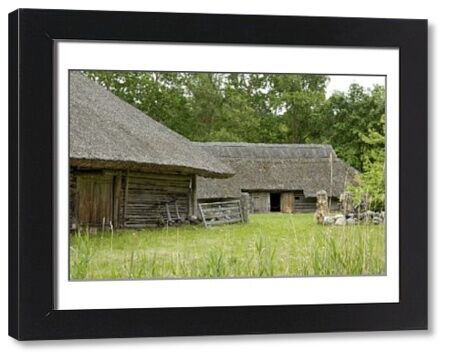
Leia noticed smoke coming from her wooden house. She ran to help put out the fire, but it grew worse and she backed off. Others came running. A house on fire among all the other wooden houses was deadly. To save theirs, they had to put out this fire. Luckily, they lived on the shores of Lake Mastis,, so water was nearby. They didn’t save the house, but saved the others this way.
The city was Telsiai, one of the oldest towns in Lithuania. Meier ran to Leia and hugged her, letting her know that her parents and brothers and sisters were all right. Meir adored Leia, hoping to marry soon. He was working for the Russians, who were now one of three superpowers in the country, others being the Prussians and Austrians. Soon, he hoped, to have enough money to build a house for them. In 1897, the Jewish population numbered 3,088, 51% of the total population. Jews were expelled during World War I, but by 1939, 2800 had returned, out of a general population of 8000. Many were involved in trade which included produce, wood, and crafts.

A major source of income was the famous Telšiai Yeshiva, (a school for Talmudic study, sometimes called a rabbinical college). It was the largest and most famous yeshiva in Lithuania between 1875 and 1941, establishing Telšiai as a center of Torah studies (the entire body of religious law and learning, including both sacred literature and oral tradition). There was also an Orthodox Jewish rabbinical seminary and a Jewish day school providing secular and religious instruction for younger children.
No wonder that citizens were proud of their Litvak heritage. It was a main center of learning. Meir spent all his extra hours after work studying here and Dora was proud of him for doing so. It gave her time to do things she wanted to accomplish.
Marek Sats, the kosher butcher, father of Meir, tapped Meir on the shoulder, motioning him to follow along the side of the burning house. There they found a pail and the remains of a can of petrol. The fire had been started on purpose. They both understood. It’s because they were Jews. 2,500 people lived in Telsiai in 1797 and of them, 1,650 were Jews (66%). They were the majority here in a majority Gentile country.
The Poles held a rebellion in 1830, hoping to overthrow Russia rule, and the Leia and Meir suffered both from the rebels and from the Cossacks, even though Meir had a friend among them. Meir’s friend, Menashe Likniker, was even accused of helping the rebels and he also worked for the Russians. He was hanged by these Russian rulers.
This caused the authorities in Telsiai to arm the population and to enlist men to fight the rebels. Jews vocalized their thoughts, saying that they shouldn’t conscript Jews into the army, as they had no arms and also didn’t know how to use them. Instead, they offered to supply the army with the necessary materials, such as steel, leather, gunpowder, etc, to which the authorities agreed, and a document was signed to this effect. Meir worked hard, shlepping hides to the Russians to be made into leather boots for the soldiers.
Shooting was coming from many of the houses. Meir ran home to get his gun to defend Leia and their Zalman and Rokhel. He ran into a spray of bullets and dropped. Leia screamed and ran to him, holding his head up. Meir’s head turned and Leia felt the life seep out of him. She sighed, picked up his rifle and held it to her eyes, and shot. Leia had taken his place. Their children would live.
Sam Gold had just interviewed a Harry Zeitz as a roommate in his big home in Portland, Oregon. Sam was working for the Health Department of Beaverton, and this fellow was a student at the Law School at Lewis & Clark College. They would get along fine.
Weeks went by and Harry mentioned that he had a sister back in Norfolk, Connecticut a few years younger than Sam and would it be all right if she wrote to Sam?
“Of course, bring her on,” smiled Sam.
The correspondence went well. They had much in common. Both loved possums. Sam sent her a toy one. Both loved dogs. Sam had had several growing up.
Finally came the day when Dora flew out to see her brother, and of course to meet Sam. They had a glorious time walking through the parks. Dora quickly learned where all the great spots were for entertainment and the young men enjoyed her visit more than they cared to say. Then she flew back home.
Before they could imagine, a wedding was planned and the two lovebirds were together again in the same nest, Sam’s family home in Portland. Time went by and they celebrated their 30th wedding anniversary.
After talking to a genealogist on the phone, Dora screamed! Oy vey! I can’t believe this! She couldn’t wait to tell Sam.
“What happened,” he asked?
Dora caught her breath and gasped. “ I just found out that my Sats relatives came from Telsiai, Lithuania, and so did your Gold relatives! They must have known each other ! It’s all proven by our DNA and by the genealogist who found both families living there. How often can such a thing like this happen? This is amazing!!It must be a one in a million event! Somehow, two people in love married long ago in Telsiai and today their descendants got back together for another love story event in Portland, Oregon.
Sam, the scientist, looked at Dora and replied. "It could be just a coincidence."
Dora thought a moment,, then had the last word. "There is no such thing as a coincidence. It is part of the great plan!
"Really," Sam said quietly with a smile on his face. "Is it simply a colloquialism that signifies our faith in God’s Divine Providence, His ability to intervene in earthly affairs to ensure that His is carried out on earth? Divine Providence and God’s intervention in nature are certainly widely accepted tenets of Jewish faith. But to say that there is no such thing as a coincidence sounds to me like a stronger claim; it suggests more than the assertion that God has the power to intervene in the natural order or even that He does so whenever He chooses. It implies necessity.
"Why not?" Dora whispered in Sam's ear. " Well, they do say our city is a weird place !"
Resource:
Preserving Our Litvak Heritage, a history of 31 Jewish communities in Lithuania by Josef Rosin with Joel Alpert, editor, by Jewishgen.inc.
FTDNA results
https://www.britannica.com/event/November-Insurrection
.
Labels: coincidence?, dna, genealogy, Kaunas, Lithuania, Telsiai
Friday, May 06, 2022
The 23rd Chromosome Match with SNPs; What Are SNPs?
Nadene Goldfoot

Our DNA (de-coxy-ribo-nucleic acid, is the blueprint of life: made up of a series of chemicals that defines unique us, except twins.
Pretend each of these blocks is one of 4 nucleotides.A=Adenine C=Cytosine
G=Guanine T=Thymine
Comparing Kit (Nadene Goldfoot) [Migration - F2 - F] and Kit [Migration - F2 - F] 1st cousins. My father is my cousin's mother's brother.
The last pair of 23 chromosomes is the 23rd which determines the sex of a child. Females have a matched XX pair and males carry an XY pair.
SNPs: Most commonly, SNPs are found in the DNA between genes. They can act as biological markers, helping scientists locate genes that are associated with disease. When SNPs occur within a gene or in a regulatory region near a gene, they may play a more direct role in disease by affecting the gene's function.
| Chr | B37 Start Pos'n | B37 End Pos'n | Centimorgans (cM) | SNPs |
| 23 | 9,455,754 | 40,868,188 | 51.8 | 4,292 |
| 23 | 107,092,263 | 115,362,823 | 9.9 | 696 |
Largest segment = 51.8 cM of a lot of SNPs
Total segments 61.6cM (32.429 Pct)
__________________________________________
(cousin once removed) [Migration - F2 - T], son of cousin's sister, a and has more cMs than a 1st cousin with Nadene
Different chromosome segments
Largest segment = 46.2 cM
Total segments 88.1cM (46.375 Pct)
| Chr | B37 Start Pos'n | B37 End Pos'n | Centimorgans (cM) | SNPs |
| 23 | 22,835,253 | 52,067,217 | 46.2 | 3,405 |
| 23 | 62,038,249 | 119,045,617 | 41.9 | 4,317 |
Largest segment = 46.2 cM
Total segments 88.1cM (46.375 Pct)
First example: The chromosome #23 shows that we our origins are connected to a female, which would be our mutual grandmother, Zlata Goldfoot nee Jermulowsky by the X designation on our chromosome list with 51.8 cMs. X means a female connection. Y would show a male connection. I have no idea what connection the 9.9cMs shows, perhaps another female such as Zlata's ancestor or even another female. The SNPs having nothing to do with the genealogy, only a type of a health factor.
Second example: Put the 2 segments together and only from 52 to 62 is missing, would have been one long segment ! The origin would have been Zlata once again.
Single nucleotide polymorphisms, frequently called SNPs (pronounced “snips”), are the most common type of genetic variation among people. Each SNP represents a difference in a single DNA building block, called a nucleotide. For example, a SNP may replace the nucleotide cytosine (C) with the nucleotide thymine (T) in a certain stretch of DNA.
We share a very large segment on #23 of 51.8cMs.
The SNP (Snip) definition is: Single Nucleotide Polymorphism, a very slowly mutating location that is used to define haplogroups.
A Haplogroup is: A population group defined by specific SNP mutations.
Recall that the DNA sequence is formed from a chain of four nucleotide bases: A, C, G, and T.
Each SNP represents a difference in a single DNA building block, called a nucleotide. For example, a SNP may replace the nucleotide cytosine (C) with the nucleotide thymine (T) in a certain stretch of DNA.
SNPs occur normally throughout a person’s DNA. They occur almost once in every 1,000 nucleotides on average, which means there are roughly 4 to 5 million SNPs in a person's genome. These variations occur in many individuals; to be classified as a SNP, a variant is found in at least 1 percent of the population. Scientists have found more than 600 million SNPs in populations around the world.
SNPs differ from substitution variants, which replace one DNA building block (nucleotide) with another. Substitution variants usually cause disease and are generally not found in 1 percent of any population. Additionally, SNPs differ from copy number variants (CNVs), which occur when a whole gene (or other large section of DNA) is duplicated or deleted.
Most commonly, SNPs are found in the DNA between genes. They can act as biological markers, helping scientists locate genes that are associated with disease. When SNPs occur within a gene or in a regulatory region near a gene, they may play a more direct role in disease by affecting the gene’s function.
Most SNPs have no effect on health or development. Some of these genetic differences, however, have proven to be very important in the study of human health. SNPs help predict an individual’s response to certain drugs, susceptibility to environmental factors such as toxins, and risk of developing diseases. SNPs can also be used to track the inheritance of disease-associated genetic variants within families. Research is ongoing to identify SNPs associated with complex diseases such as heart disease, diabetes, and cancer.
Human DNA contains 3,147 million chemical nucleotide bases (A,G,C,T). The total length of DNA present in one adult himan is about 2 x 10meters, the distance from the earth to the sun and back. The DNA in an average chromosome is about 5cM long.
Almost all (99.9%) nucleotide bases are exactly the same in all people; and 997% are the same as the chimpanzee's.
As far as genealogy goes, we genealogist need not worry about SNPs, which show a health factor, and unless you are a nurse or doctor, would not be interested.
I was always hoping that SNPs would tell me some vital information about how many generations apart or such we would be, but will not fret about those numbers anymore.
Resource:
DNA & Genealogy by Colleen Fitzpatrick & Andrew Yeiser, 2005
https://medlineplus.gov/genetics/understanding/genomicresearch/snp/
Labels: dna, genealogy, health, nucleotides, SNPs
Wednesday, April 20, 2022
Tracking Down Kalonymos Descendants
Nadene Goldfoot

Helping a young first cousin once removed to do research on her genealogy via the internet, I told her about our connection to the Kalonymos family that I had been told were on our family tree. My young cousin wanted verification, facts for proof. This family was so important to our Ashkenazi line, which went back, it was said, to Hillel and Rashi who had a pedigree to King David. Rashi's tree can be found in Dan Rottenberg's book, FINDING OUR FATHERS.
He wrote on page 255, "Kalonymus--Prominent family from 8th century, Italy and 10th century Germany. JE has a family tree and 12 biographies. LBI also has a family tree relate to Ullstein. Also see JE articles on David ben Jacob Meir, David ben Kalonymus, David Kalonymus of Naples, and Mayence (Mainz) and see EJ article on Eleazar ben Judah of Worms. Related to Salman, Darshan and Jaffe." (JE=Jewish Encyclopedia,, LBI=Leo Baeck Institute, EJ=Encyclopedia Judaica.)
Kalonymos or Kalonymus (Hebrew: קָלוֹנִימוּס Qālōnīmūs) is a prominent Jewish family who lived in Italy, mostly in Lucca and in Rome, which, after the settlement at Mainz and Speyer of several of its members, took during many generations a leading part in the development of Jewish learning in Germany. The family is according to many considered the foundation of Hachmei Provence and the Ashkenazi Hasidim.
A genealogy tree from 1080 has been developed. Our group of DNA testers on Family Tree DNA have discovered that Kalonymos is one of the founders of the Halpern & Branches group. It's an important surname for many of the Jewish people who are doing genealogy research.
I finally got so curious that I used Kolonymos in Family Tree DNA where I have my test and up came someone with Klonymus Kalman. We connected and messaged.

I just now discovered right on Wikipedia, 2 rabbis, related to each other. Rabbi Klonymus Kalman Epstein born in Nowy Korczyn (Neustadt), Poland, 1753 – Kraków, 1825) son of Aaron Halevi Epstein, descendant from the Prophet Samuel and King David. ; was a rabbi and Kabbalist, one of the great leaders of the Chassidic movement, known as the Maor Vashamesh (מאור ושמש) after his sefer.

Rabbi Shapira's only son, his daughter-in-law, and his sister-in-law were killed during the Nazi aerial bombing of Warsaw in September, 1939. After the invasion of Poland, Rabbi Shapira was interned with a few of his hasidim in the Warsaw Ghetto, where he ran a secret synagogue. He invested enormous efforts in maintaining Jewish life in the ghetto, including arranging for mikveh immersions and kosher marriages. Rabbi Shapira was able to survive in the ghetto until its liquidation, avoiding the tragic deportations to Treblinka in the summer of 1942, because of the support of the Judenrat. Like other notables, he was given work at Schultz's shoe factory—a path to ongoing survival.
After the Warsaw Ghetto Uprising was crushed in 1943, Rabbi Shapira was taken to the Trawniki work camp near Lublin. Although offered the opportunity to escape from the concentration camp, he apparently refused. Following the Jewish uprising in the Treblinka death camp (August 2, 1943) and in Sobibor extermination camp (October 14, 1943), there was increasing concern among the Nazi authorities that there would be further outbreaks of violence at other concentration camps. For this reason, Aktion Erntefest (Operation Harvest Festival) was launched. During this operation, carried out on November 3, 1943, all the remaining Jews in Trawniki, including Rabbi Shapira, were shot to death.
Resource:
https://en.wikipedia.org/wiki/Klonimus_Kalman_Epstein
https://en.wikipedia.org/wiki/Kalonymus_Kalman_Shapira
Finding Our Fathers-a guidebook to Jewish genealogy by Dan Rottenberg
Labels: Ashkenazim, genealogy, Kalonymus Kalman Shapira, Klonimus Kalman Epstein, Poland, Rabbis
Saturday, May 01, 2021
Oppenheim or Oppenheimer Connection from Lithuania to South African and American Jews Including Us

Nadene Goldfoot
I've been reading the book, Heshel's Kingdom by Dan Jacobson about his Lithuanian family and grandfather, Rabbi Heshel Melamed of Lithuania who's father-in-law and the author's great-grandfather, Zvi Yakov Opppenheim. The book tells of intimate details about Lithuania, even mentions Telz, which is also spelled as Telsiai, where our Goldfus/foots were from.
On our family tree, we have many Oppenheims and Oppenheimers on our Telsiai branch of the tree. The Oster line that has married into our line also has many Oppenheimers on it. We are related by DNA to the Oster line even though we have no connection from eastern Europe. It must have happened while both were Jews in Germany at the beginning of our German experience of becoming Ashkenazim and must have been quite close at one time being our closeness now.
On Family Tree DNA, I myself have 8 matches with Oppenheim. One is a 3rd cousin; 2 are 4th cousins and 5 are 5th cousins. The 3rd cousin is female, S. Oppenheim which could be a married name, so a man would be Dr. R. Oppenheimer on my father's side with the icon, 4th cousin. I match Dr R.O. on chromosome #7 with my brother, and Ian; on #10 with myself, David, Ian and Sandra, and #14 with myself, David. With another set of people, I see that chromosome #18 had a female 5th cousin A Oppenheimer match David, Myself and 3rd cousin Mrs. Andi Z with a small segment. I'm going by the color coding chart with is easy to use 7 people at one time to check on matching.
OPPENHEIM, town in Germany. Jews are first mentioned there in the tax register of 1241, according to which they were obliged to pay the emperor an annual tax of 15 marks. The Jews of the town, legally the property of the emperor, were placed under the protection of the officers in charge of the local fortress, to whom they paid their taxes. They also paid a house tax to the archbishop of Mainz. *Rudolf of Hapsburg and other kings gave letters of credit to various noblemen which were to be defrayed from the taxes paid by the Jews of Oppenheim; at times, they also leased these taxes. The burden of their taxes appears to have caused several Jews of Oppenheim to join the group that fled from the Rhineland and, under the leadership of *Meir b. Baruch of Rothenburg, attempted to emigrate to Ereẓ Israel (1285). At the end of July 1349, during the persecutions that followed the *Black Death, most of the Jews of Oppenheim were murdered, while others chose martyrdom (*kiddush ha-Shem) and burned themselves to death in order to escape forced conversion at the hands of the mob. Among the martyrs was the rabbi Joel ha-Kohen. (more info in resource), below.)
People in my "The New Standard Jewish Encyclopedia" are listed:
Samuel Oppenheim/Oppenheimer b: 1630 philanthropist, court Jew, Germany to Vienna, Leopold's I's agent and financier.
David Oppenheim b: 1664, rabbi born in Worms, Germany nephew of Samuel Oppenheimer
Joseph ben Issachar Susskind Oppenheimer 1698, financier in Germany
Hermann Oppenheim b: 1858 Germany, neurologist
Moritz Daniel Oppenheim b: 1800 Germany, painter
Oppenheimer, David b: 1832 Canada, founder of city of Vancouver, Ontario, mayor
Oppenheimer, Sir Ernest b: 1880 South Africa, mining-Kimberley, probably Lithuanian, baptised
Franz Oppenheimer, b: 1864 Germany
Robert J. Oppenheimer b: 1904, US physicist, U of C, atomic energy research
Through genealogy, I see this connection:
Descendants of Sender Opengeim Oppenheim
1 Sender Opengeim Oppenheim b: Abt. 1814 in Telsiai, Telsiai, Kaunas, Lithuania
. 2 Iontaf Jontaf Opengeim b: 1839 in Telsiai, Kaunas, Lithuania
..... +GUTTA GOLDA bat Nochem GOLDFUS b: 1839 in Telsiai, Kaunas, Lithuania m: September 04, 1859 in Telsiai, Lithuania m: September 04, 1859 in Telsiai, Lithuania
. 2 Iosif OPPENHEIM b: Abt. 1841
..... +Guta (Golda)
. 2 [1] Shaia Opengeim OPPENHEIM b: Bet. 1842 - 1843 in Telsiai, Telsiai, Kaunas, Lithuania
..... +Zlate Pere
. *2nd Wife of [1] Shaia Opengeim OPPENHEIM:
..... +Tsipe Guta b: 1843 in Telsiai, Telsiai, Kaunas, Lithuania m: Bef. 1865 in Telsiai, Lithuania m: Bef. 1865 in Telsiai, Lithuania
. 2 [2] Leib Opengeim OPPENHEIM b: Abt. 1845 in Telsiai, Telsiai, Kaunas, Lithuania
..... +Rokhel b: Abt. 1845
. *2nd Wife of [2] Leib Opengeim OPPENHEIM:
..... +Grunia
. 2 Iomta Opengeim b: Abt. 1849 in Telsiai, Telsiai, Kaunas, Lithuania
..... +Gute b: Abt. 1849 in Telsiai, Telsiai, Kaunas, Lithuania m: Abt. 1869 m: Abt. 1869
Resource:
https://www.jewishvirtuallibrary.org/oppenheim
Labels: dna, encyclopedia Oppenheim, genealogy, Germany, Heshel's Kingdom, Lithuania, Oppenheimer, South Africa, USA
Sunday, December 27, 2020
Brig General Dan Goldfus, Head of Infantry and Paratroopers Corps in Israel
Nadene Goldfoot

Brig Gen Dan Goldfus, Head of Infantry and Paratroopers Corps, Israel, paid a courtesy call on Gen. Purna Chandra Thapa, COAS, Nepalese Army, on 12 September 2019. The duo also discussed on possible future mutual cooperation. Now, which man is which? Both are generals! Dan's on the left in the blue shirt.
In Hebrew his rank is called a Tat Aluf-or Ta'al which shows one rocket? laying over a leaf. it's 3rd from the top rank.
Our surname was originally Goldfus. Dan Goldfus could be our cousin. Stanley Goldfoot of Jerusalem was a 3rd cousin. If his ancestors were from Lithuania, there's a 100% chance we are related and share a few genes. Stanley's parents emigrated to South Africa while ours emigrated to the USA.
Yes, I have found him on my tree. We are 4th cousins twice removed according to my Family Tree Maker chart. I'd love to have a DNA test from Dan to see what genes we share. If my research was correct, and I worked on this some years ago, his father was a Chaim Goldfus and mother was Caroline Ida Stern. He is 42 years younger than me. How wonderful to have him as a relative, though a distant one! If I am correct, Dan's birthday is tomorrow! Happy Birthday cousin Dan! What a coincidence!
I have our common ancestor being:
Iankel (Yankel) Goldfus b: 1768 in Telsai, Telsiai, Kaunas, Lithuania
Dan was from his son, Chaim c: 1801
I was from his son, Iosel (Josel) Symka ben Yankel b: c1798.
June 4, 2020 had an article in it from Jerusalem Post mentioning "Head of the Infantry and Paratroopers Corps, Brig. Gen. Dan Goldfus to lead it.
Lt.-Col. Avichai Mor Yosef was accidentally shot in the abdomen by another commander during a live-fire drill into Wednesday night.
Challenges of Command

The departing commander of the IDF Nahal Brigade, Col. Dan Goldfus (Photo: IDF)
The commander of the IDF Nahal Brigade, Col. Dan Goldfus, is regarded as one of the most daring and ethical officers in the IDF. A fighter through and through, he encountered numerous terrorists at point-blank range during his 23 years of service in the IDF, in nearby theaters like the West Bank and the Gaza Strip, as well as in remote places which must remain unnamed. (I notice he's right-handed. My brother and a cousin and I are left-handed.)
"Goldfus is the son of new immigrants from South Africa who settled in Jerusalem. Originally religious, he does not wear a Yarmulke anymore. Goldfus joined the IDF in 1995 and volunteered for the IDF Navy's 13th Flotilla ("Shayetet") – the Naval Commandos. During Operation Shirat HaTzaftzafa, the fiasco in Ansariyeh, Lebanon in 1997, Goldfus, then a young warfighter, was a member of the rescue team that rushed to help the detachment that had sustained heavy casualties. This incident evolved into one of the most tragic disasters in the history of the 13th Flotilla, and remains an open, unresolved case for many within the unit even 21 years later. Back then, Goldfus was a 20-year-old warfighter in an operation still regarded as a severe and traumatic incident, and the actual circumstances and causes remain a mystery, as far as he is concerned. The IDF Chief of Staff has recently appointed Goldfus as Chief IDF Infantry & Paratroopers Officer. He will be promoted to the rank of Brigadier General, and the implication is that he would not fulfill the dream of every naval commando – to become the commander of the 13th Flotilla. If Goldfus is disappointed – he hides it well, and definitely does not allow this fact to affect his demanding job as commander of the IDF Nahal Brigade."

Stanley Goldfoot was from South Africa. Many Jewish Lithuanians emigrated there.
"In a special interview, the departing commander of the IDF Nahal Brigade, Col. Dan Goldfus, talks about the challenges of his position, the threats facing the various theaters, and dealing with the young generation joining the military. "The troopers come from a technological world where everything is instant. Our job is to challenge them.""
Goldfus' IDF career has always been a zigzag between the Naval Commandos and the Nahal and other brigades of the "larger IDF" – those outside the realm of elite specialist units. During Operation Protective Shield, Goldfus served as the commander of the Nahal Brigade's reconnaissance company – Sayeret Nahal. For his performance while in this position, in a series of successful counter-terrorism operations in the territories, the general officer commanding IDF Central Command, Maj. Gen. Moshe Kaplinski, awarded Goldfus a Major General's citation. He subsequently served as deputy commander of the 13th Flotilla, and then as commander of the IDF 769th Brigade – the Hiram Formation (the eastern brigade deployed along the Lebanon border). While in this position, the Brigade sustained a severe attack by anti-tank missiles Hezbollah had launched at a convoy of the Givati Brigade on Mount Dov. This incident, IDF designation "Shemesh Horpit," brought the State of Israel very close to the outbreak of the "Third Lebanon War," or the "First War of the North."
We met Col. Goldfus at the training camp of the Nahal Brigade in Tel Arad. The training troopers practice close-range running engagement drills, a 'dry run' followed by a 'wet run' (live fire). "They study the posture and acquire the ability to shoot effectively. I am a great believer in the simulators they had trained on before. We want to develop this activity further," says Goldfus.
Col. Goldfus is the type of commander you can tag as "old school" – one who regards his service as a calling, who regards the IDF as a military whose range of tasks transcends the realm of just fighting or training for war. The IDF Nahal Brigade has recently experienced a major trauma. On November 30, 2017, local Bedouins knifed to death one of the Brigade's troopers, Sgt. Ron Kokia, at a transport station in Arad, and escaped with his firearm. The victim was on his way back to the Nahal Brigade's training camp. "He had arrived at the transport station and waited there on a bench. We never thought it would come from within. We expected it to come from the territories, from the area of Hebron."
Out of the shock and rage, Goldfus announced a new project titled "Ohel Avraham" (Abraham's Tent) – a series of encounters aimed at getting to know the Bedouin community of the Negev, living close to the Nahal training camp. The formal objective was reconciliation and mutual acquaintance. The informal objective was to increase the percentages of Bedouins recruited into the IDF, opposite the trends of Islamization and radicalization, with Hamas, the Islamist Movement, and ISIS competing against the IDF over the hearts and minds of the young Bedouin generation.
"The project consists of four meetings, beginning with a meeting of the commanders," Goldfus explains. "We aim for a partnership, for 'togetherness.' The idea is for the (Bedouin) youngsters to see the troopers, and for the troopers to see the (Bedouin) youngsters, and drop off the stigmatic labels."
Is being a brigade commander in the IDF more complicated today than it was when you joined the Flotilla back in 1995?
"We had a training activity where we took the guys out and spent three days without access to mobile phones. Suddenly there was interaction among the troopers. Suddenly they started speaking to one another. When those three days were over, each one took back his mobile phone and went away, engrossed in the screen. It was an interesting challenge. The hierarchy has become flat since I had joined (the IDF). The story you are telling will be challenged. You must be prepared to answer the questions of even the last trooper. Maj. Gen. (res.) Yom-Tov Samia, who had served as the commander of the 931st Battalion of the Nahal Brigade, came to speak to the Battalion's troopers. Suddenly, a trooper stood up and asked 'Why would you go into politics?' Back in the day, who had the nerve to stand up and ask? It is amazing. It is great. You must understand the life of these guys. Especially the younger commanders – the challenge they face is even more substantial. Their friction is with the information. Today it is 'sit down, platoon commander, and I will tell you what it was like.' We must empower the platoon commander. We take what we do for granted. An 18-year-old youth hears a radio commercial for a college. Here with us, you will find command and a mission. We assign crazy adult responsibilities to 18 and 20-year-old youngsters. Today they are regarded more as children and the parents are more intensively involved and you attempt to establish a triple commitment: command-trooper-parent."
Col. Goldfus walks over to the new recruits near the encampments. "What's up, guys?" he asks them while shaking hands with each one in turn.
You are a little old fashioned with regard to military-society relations, are you not? Is it actually the military's job to educate about and become acquainted with the Bedouins? People will say 'what is to you? Go out and fight or prepare for war.'
"Yes, I believe in it. If that means being old fashioned, so I am, and I do believe in it. This is the real strength. I do not believe in a professional military. I will be delighted to take off my uniform, but I am here because I believe in what I do. It is amazing, nothing is more virtuous than this. Nothing equals the opportunity to raise and lead people."
In the week when we met at the Nahal training camp, elements of the Nahal Brigade were operating in all of the different sectors: Col. Goldfus' brigade had one battalion deployed in Hebron, another battalion on the Golan Heights along the Syrian border and two more battalions deployed along the Lebanon border. As the brigade commander, he is running around from one battalion to the next.
"We are just like any other infantry brigade," says Goldfus. "We set ourselves a goal to be excellent and relevant. The infantryman asks himself 'how can I be relevant?' We should have the best equipment, use simulators and be able to identify the reference threat. Hezbollah and the built-up area are relevant to both the north and the south and we are preparing our men accordingly."
You have recently concluded a division-level training exercise with the IDF Southern Command's 162nd Division to which the Nahal Brigade had been attached. How close did it feel to a situation where, at a moment's notice, you would be inside the Gaza Strip in the context of a new major operation, owing to the deterioration in the Gaza Strip?
"I believe that with the 162nd Division we came and managed to reach a common language at a very, very high level with regard to plans, concepts and how we expect ourselves to accomplish the mission when the time comes. All the way, that is the plan. Go all the way – wherever we may have to go. Based on that, you may say that you want to stop somewhere or initiate a certain act to influence the operation. The prevailing feeling is that it is a matter of decision-making – to embark or not to embark (on a new operation in the Gaza Strip – O.H.) – and we are ready. That is what we say to the Chief of Staff: we are ready, we are determined, and we will accomplish the mission. We have no doubts about it. One of the most significant problems is the fact that we sometimes doubt our own capabilities.
"We listen too much to the other side. To Nasrallah, to Sinwar, to anyone who wants to tell us stories. We need to ask ourselves what about us. We will always have gaps. Am I fully satisfied with what I have, with the training time allotted to me? No. Definitely not, but we must be ready to accomplish the mission with what we have, without excuses. To come in and initiate all the time. We remain on a very high state of alert for whatever we may be required to do. My mission, as a field commander, is to prepare my men to be resolute, to be the kind of men who can, at the end of the day, remain ethical and accomplish the mission."
How do you view the criticism the IDF is sustaining over its activities in the Gaza Strip following every major operation and even over the operations along the border fence?
"I have no problem with all kinds of organizations that state 'we were not like this and we were not like that.' On the contrary, I draw strength from the fact that I have to explain things better, to ourselves and to our soldiers. With regard to all kinds of incidents. An incident has occurred. Why did we act this way and not that way? Let us ask ourselves why we did what we did. We live in a democratic country. We must be strong enough to allow it."
Challenging the Troopers
Do you ask yourself what it would be like next time, in the next major operation in the Gaza Strip?
"Certainly. All the time. I am obliged to ask myself what it would be like all the time. I took my platoon commanders and asked them 'Tell me what the next war will be like. Envision the next war and describe it to me'. At the time of Operation Protective Edge, the troopers you see here were in the ninth grade, but where were the commanders? It is very difficult for them to envision the war, but it is very easy for them to envision their vacation in Thailand. You must help them envision the challenges of the next war, the encounter with combat. I think we are very powerful. We do not have to be arrogant. We must allow the problems to float up without fear of criticism. Anyone who fails to do it will be lost.
"I keep asking myself and the commanders above and below me: what can I do and what would be more complex for me to do. Scaring myself to death with casualty figures is ineffective. I always strive to get everyone I can back safely. It was during Operation Protective Edge that I witnessed realization that these things involve casualties. I believe the civilians were very strong. Some mistakes were made during Operation Protective Edge that we must learn from in order to be better next time."
Do such guys as the recruits of the Nahal Brigade train, for example, to fight in the underground tunnels – what the IDF calls subterranean warfare?
"We strive to avoid the subterranean medium. What we have to do is turn the subterranean medium into a death trap for the other side. Look at history, at the battle of Okinawa. What did the Japanese say? 'We cannot cope with the Americans, so let's build tunnels.' They built three lines of defense made up of tunnels. They had intended to force the Americans to fight for every inch.
"Hamas says: I cannot resist the IDF. If the IDF wants to – it will conquer the entire Strip in a second. Consequently, I have to think of a way to turn their space into a death trap, to drive them out of their safe space. That is the name of the game. That is the battle. I want to deliver my advantages and my subterfuge to the battlefield. We have the method to do it and the cooperation to do it. Nothing is perfect. We must practice our advantages and work on our disadvantages. They look for ways to kidnap an IDF trooper. They look for ways to turn a small incident into a major strategic event, and I look for ways to deny it to them, to kill them under the ground and not to play into their hands.
"These troopers are currently going through their basic training. For the first time since the year 2000 and the second Intifada, we are once again training according to the 17-17 pattern: seventeen weeks of training followed by seventeen weeks on frontline duty, so the troopers are training much more. The troopers get to know their weapons and the commanders can evaluate the quality of the training activity. We want to see how a trooper, who goes into the training activity at a performance level of X, emerges from that activity: X plus how much? We need to understand what the training had given him. This applies to the simulators that simulate the battlefield, including the casualties.
"We have to challenge them. The troopers come from a technological world where everything is instant. Our job is to challenge them in the context of what we are about to encounter during the war. We developed a training seminar on being the 'coiled spring.' Only for the Gaza Strip, only scenarios."
Resource:
https://www.israeldefense.co.il/en/node/36727
me-research on genealogy of Goldfoot/Goldfus
Labels: Commander, genealogy, Goldfoot, Goldfus, IDF, Israel, Jerusalem, South Africa, Stanley Goldfoot
